
Coming Soon
laser vision correction, refractive surgery
 

What is LASIK?

lasik, laser vision correction
nearsightedness, farsightedness
astigmatism
The three steps of
LASIK surgery

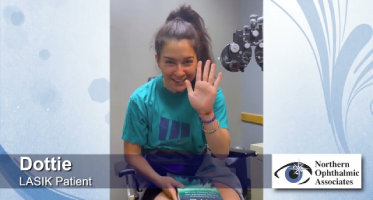
LASIK is an exciting surgical procedure that improves vision in mere minutes. LASIK improves vision safely and precisely by reshaping the cornea to correct nearsightedness (myopia), farsightedness (hyperopia) and astigmatism. Most patients enjoy 20/20 vision or better after treatment.

The most commonly performed elective surgery in America, LASIK combines the advantages of two sophisticated technologies: the accuracy of the excimer laser and the benefits of lamellar keratoplasty. It is safe, precise and highly successful. Thanks to LASIK, millions of people worldwide have experienced the wonder of clear vision without glasses or contact lenses.

LASIK offers many improvements over other refractive surgery procedures. These include little or no post-operative discomfort, immediate vision improvement, and the ability to drive or return to work quickly—sometimes as soon as the next day. Most patients require no corrective eyewear after surgery (although patients over 45 often need reading glasses).

Call today to schedule your consultation and find out you are a candidate for LASIK. Soon you could be tossing away your glasses or contact lenses and enjoying the freedom of clear vision.


Custom Wavefront Technology

Wavefont technology makes it possible to perform customized refractive surgeries using information gathered from the patient's own eyes. This allows us to correct the very specific refractive errors that obscure each patient's vision so patients enjoy the best post-operative vision quality possible.

During the pre-operative examination, we collect a set of measurements called a wavefront. Data from the exam is converted into a waveprint -- a unique profile of your optical system that is as personal as a fingerprint. The laser then maps the information in your waveprint onto your cornea, reshaping it for unparalleled vision improvement.


Am I a candidate?

lasik, lasekNot everyone is a good candidate for LASIK. When you come in for an evaluation, your eyes will be examined to determine whether LASIK or another refractive procedure is appropriate for you, and whether you are at risk for any complications.

The ideal LASIK candidate:

  • Is over 18 years old;
  • Has had stable vision for at least six months;
  • Has a healthy cornea thick enough for the laser to cut a flap;
  • Has refractive error(s) that fall within the treatable range;
  • Does not have a disease or condition that could impair the procedure or healing process;
  • Has been educated about the procedure including its risks and benefits.
  • Understands that the goal of surgery is to improve vision and reduce dependence on glasses and contact lenses.
During your consultation, Dr. Pyfer will review your eyesight and discuss whether LASIK is right for you.


What happens during the procedure?

During the LASIK procedure, the surgeon uses a device called a microkeratome to create a thin flap in the surface of the cornea. The flap is then lifted and the computer-controlled excimer laser beam is applied to reshape the cornea's curvature to improve vision. Then the flap is replaced, adhering quickly without the need for stitches. The procedure takes only about 15 minutes for both eyes, with the laser actually activated for just 10-60 seconds per eye.

The flap edge heals on its own within a few hours, but eye protection is required for the first week or more to allow complete healing. Good vision and comfort is achieved rapidly in most cases, usually by the next morning. A common sensation shortly after surgery is sensitivity to light and a sandy or gritty feeling of the eyes, but this is controlled with eye drop medications and subsides quickly. Antibiotic and anti-inflammatory eye drops will be prescribed for a few days, along with lubricating drops to prevent dryness for several weeks.

Fully 100% of our patients have achieved 20/40 vision or better after LASIK, and 95% are 20/20, with many custom wavefront LASIK patients seeing 20/15 or even 20/10 (better than 20/20) without glasses! These results meet or exceed the published FDA clinical trials for LASIK.


What is PRK or Epi-LASIK?

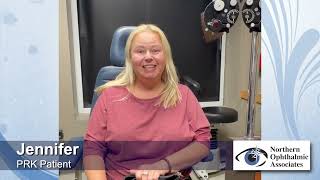
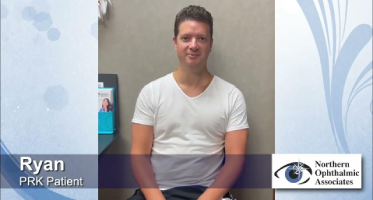
prk, epi-lasik PRK or photorefractive keratectomy and Epi-LASIK are alternatives to LASIK when it is not possible or safe to make a corneal flap with a microkeratome. Like LASIK, these procedures reshape the cornea with an excimer laser to improve vision.

However, instead of making a flap in the cornea, in PRK and Epi-LASIK the surgeon uses an instrument to remove only the very thin layer of surface cells, called the epithelium. These cells regenerate quickly, over a period of 3-5 days in most cases. The excimer laser is then applied in the same way as in LASIK, to reshape the top of the cornea and refocus vision. PRK and Epi-LASIK are often called “surface ablation”, in contrast to LASIK which reshapes the middle layers of the cornea. Surface ablation takes a few extra days to heal compared to LASIK, but preserves more tissue for people with thin corneas or high corrections. Also, surface ablation is recommended for law enforcement or military personnel who cannot adequately protect their eyes during the healing period for LASIK.

FDA studies have shown that 90-95% of patients with a correction of up to -6.00 diopters achieve vision of 20/40 or better after PRK, and up to 70% achieve 20/20. Patients needing less correction generally achieve better results. Surface ablation takes slightly longer to heal than LASIK, and may result in some irritation of the eyes during the first 3-5 days. Anti-inflammatory eye drops are required for several weeks to prevent haze formation.

Dr. Pyfer was the first surgeon to perform Epi-LASIK at the Wills Eye Surgery Center in Bucks County, and he has extensive experience with this new blade-free technique to help assure your comfort and safety.


How Do I Know What is Right for Me?

The procedure recommended, if any, is customized for every patient, and can only be determined during an extensive personal evaluation with Dr. Pyfer and his staff at either our Jenkintown or Wills Eye Hospital offices. There is no charge for this Laser Vision Correction consultation, and it is the best way to determine if you could benefit from these remarkable procedures. If you would like to learn more or schedule an evaluation, call 215.885.6830, or fill out the email response form to contact our Laser Vision coordinator now. We look forward to helping you achieve your own personal best vision!


Choosing a Surgeon

Choosing to undergo eye surgery is a difficult decision with long-lasting consequences. You will live with the results of your surgery for years to come. That's why it's so important to find an experienced surgeon equipped with the latest technology to ensure that you enjoy the best surgical result possible, with improved vision and no complications. You probably don't want to put your eyesight in the hands of an inexperienced surgeon or budget LASIK practice.

Experience

Dr. Pyfer specializes in laser vision correction, offering custom Wavefront LASIK at the Wills Eye Surgical Network Locations. He is specially trained and experienced in LASIK and laser vision correction and has performed thousands of vision correction procedures. He is specially certified in LASIK using the most advanced lasers, such as the VISX CustomVue System.

Honesty

We don't pressure our patients into undergoing a procedure that isn't right for them. Every patient interested in LASIK is given an extensive evaluation to determine whether LASIK is right for him or her. During the consultation, the patient and surgeon have a frank discussion about the advantages and risks of having laser vision correction. Only then is the patient accepted as a pre-operative LASIK candidate.

Caring

Unlike high-volume LASIK "factories," we take the time to ensure that every patient receives the best care and attention. The procedure is quick—about 15 minutes per eye—but we don't rush our patients in and out of the office to make room for the next one in line.


  What is LASIK?  
   
  Am I a candidate?  
   
  What is PRK?  
  Choosing a Surgeon  


 Welcome    Our Doctors    Cataract Surgery    Laser Vision Correction    Our Services    Contact Us    Office    Maps    Terms of Use

Copyright © 2005 Northern Ophthalmic Associates and MedNet Technologies, Inc. All Rights Reserved.

MedNet-Sites by MedNet Technologies